



Contents
- 1 How to Set Up an Altar
- 1.1 A Step-by-Step Guide to Creating a Sacred Space for Your Altar
- 1.2 Understanding the Purpose of an Altar
- 1.3 Choosing the Right Location
- 1.4 Cleansing and Preparing the Space
- 1.5 Selecting Your Altar Surface
- 1.6 Gathering Sacred Items
- 1.7 Balancing the Elements
- 1.8 Setting Intention and Activation
- 1.9 Maintaining and Evolving Your Altar
- 1.10 Creating Daily Rituals
- 1.11 Final Thoughts
- 1.12 How to Make a Spiritual Altar for Meditation
- 1.13 How To Create a Book of Shadows
- 1.14 How to Create a Sacred Place
How to Set Up an Altar
A Step-by-Step Guide to Creating a Sacred Space for Your Altar
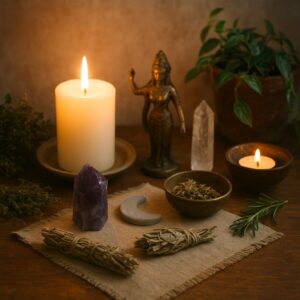 An altar is more than just a decorative surface; it’s a sacred focal point that represents your connection to the spiritual world, nature, or divine energy. Across cultures and belief systems, altars have been used for centuries to honour ancestors, perform rituals, and focus intention. This article explains how to set up an Altar.
Creating your own altar at home allows you to bring spirituality into your everyday life, offering a place to centre your thoughts, express gratitude, or channel energy during rituals or meditation. Whether your path is religious, magikal, or purely personal, your altar becomes a physical manifestation of your spiritual journey.
Let’s explore how to set up an altar that feels deeply meaningful and uniquely yours.
-
Understanding the Purpose of an Altar
Before gathering candles or crystals, it’s important to clarify what your altar will represent. The purpose of an altar is to provide a sacred space, a physical anchor for your spiritual energy, rituals, or magikal work.
Some common purposes include:
-
-
- Personal growth: A space for journaling, reflection, or meditation.
- Magikal practice: A centre for spells, rituals, or moon work.
- Ancestral connection: Honouring your lineage and spiritual guides.
- Seasonal celebration: Marking Sabbats, solstices, or lunar cycles.
- Daily mindfulness: Lighting a candle or giving thanks to start your day.
-
Your altar doesn’t need to fit into any fixed tradition. It’s your sacred reflection; a symbol of what spirituality means to you.
-
Choosing the Right Location
The location of your altar sets the tone for your practice. It can be anywhere, a dedicated table, a windowsill, or even a small tray that you bring out during rituals.
Here are some tips for choosing the perfect spot:
-
-
- Quiet and private: Select a place where you can focus without interruption.
- Comfortable: Somewhere you naturally feel at ease, whether indoors or outdoors.
- Clean and uncluttered: A clear, organised space helps energy flow freely.
- Energetically aligned: Notice how different areas of your home feel. Choose one that resonates with peace and positivity.
-
If you work with directions (common in Wiccan or elemental practice), consider facing your altar toward the north (Earth, grounding) or east (Air, inspiration). But ultimately, follow your intuition.
-
Cleansing and Preparing the Space
Before placing any objects, take time to energetically cleanse your chosen area. This clears away stagnant energy and creates a blank canvas for spiritual work.
Try one or more of these cleansing methods:
-
- Smudging: Burn Sage, Palo Santo, or Incense and waft the smoke over the area.
- Salt: Sprinkle sea salt or Himalayan salt on the surface, then wipe it away.
- Sound: Use a singing bowl, bell, or chime to break up dense energy.
- Visualisation: Picture a bright light washing over the space, purifying and renewing it.
As you cleanse, speak your intention aloud, such as:
“I cleanse this space of all energy that no longer serves me.
May it now be a place of peace, clarity, and sacred purpose.”
-
Selecting Your Altar Surface
Your altar can be as simple or elaborate as you wish. Some options include:
-
-
- A small table or shelf for a permanent altar.
- A wooden box, dresser, or windowsill if space is limited.
- A folding tray or cloth setup for temporary or travel altars.
-
If possible, choose natural materials like wood or stone to enhance grounding energy. You can also cover your surface with a beautiful altar cloth, perhaps in a colour that matches your intention (white for purity, green for abundance, purple for spirituality).
-
Gathering Sacred Items
Now comes the creative and spiritual part, choosing what to place on your altar.
There are no strict rules, but here are some common and meaningful items to consider:
-
-
- Candles: Representing fire, transformation, and illumination.
- Crystals or stones: For grounding, healing, or amplifying energy.
- Incense or oils: For cleansing and invoking specific energies.
- Symbols or statues: Deities, ancestors, or spirit guides you honour.
- Plants or flowers: Representing life, growth, and Earth’s natural cycle.
- Offering bowl or cup: To hold water, herbs, or small offerings.
- Personal items: Photographs, jewellery, feathers, or shells that hold special meaning.
-
When selecting items, trust your intuition, choose objects that resonate with your energy and purpose.
-
Balancing the Elements
A balanced altar often includes representations of the four classical elements — Earth, Air, Fire, and Water, and sometimes a fifth, Spirit.
Here’s how to represent each:
-
-
- Earth: Stones, salt, soil, or plants.
- Air: Feathers, incense, or bells.
- Fire: Candles or sunlight.
- Water: A small bowl or chalice filled with water or shells.
- Spirit: A crystal sphere, sigil, or anything symbolising the divine.
-
These elements connect you with the natural world, grounding your rituals in universal balance.
-
Setting Intention and Activation
Once your altar is arranged, it’s time to activate it with your intention. Sit quietly, light a candle or incense, and take a few deep breaths. Feel the energy of the space come alive.
You might say a simple blessing, such as:
“I dedicate this altar to peace, wisdom, and magik.
May it be a place of light, love, and transformation.”
Visualise your altar glowing with soft, golden energy. This seals your intention and awakens the sacred energy within the objects.
-
Maintaining and Evolving Your Altar
Your altar is a living, evolving space. Over time, you may feel called to add, remove, or rearrange items as your spiritual practice changes.
To maintain your altar:
-
-
- Keep it tidy and dust-free.
- Regularly cleanse the energy with incense or sound.
- Change decor seasonally, add flowers in spring, leaves in autumn, or candles for the winter solstice.
- Renew your intentions during moon phases or significant dates.
-
You might also keep a small journal or Book of Shadows near your altar to record reflections, dreams, or magikal experiences.
-
Creating Daily Rituals
Your altar becomes most powerful when used regularly. Even a few moments a day can deepen your connection.
Here are simple ways to use your altar:
-
-
- Light a candle each morning and set an intention for the day.
- Express gratitude before bed.
- Meditate or breathe quietly before your altar.
- Use it for moon rituals, spell work, or tarot readings.
- Leave offerings of herbs, water, or crystals for the spirits or the universe.
-
These small acts cultivate consistency, grounding your spiritual energy in daily life.
-
Final Thoughts
Setting up an altar is a deeply personal and spiritual experience. It’s not about perfection or aesthetics, it’s about connection.
Your altar is your mirror: it reflects your beliefs, emotions, and energy. Whether it’s a single candle on your bedside table or a full magikal setup filled with crystals and herbs, what matters is the intention you bring to it.
Over time, your altar will become a sanctuary, a place where you can pause, reflect, and reconnect with your highest self.
So, gather your tools, clear your space, and begin your journey. Your sacred altar awaits.