



Contents
- 1 Understanding the Chakra System
- 1.1 A Beginner’s Map to Energy Flow and Chakra
- 1.2 What Are Chakras?
- 1.3 The Seven Main Chakras Explained
- 1.4 How Energy Flows Through the Chakra System
- 1.5 Simple Ways Beginners Can Work with Chakras
- 1.6 Final Thoughts
- 1.7 How to Make a Dowsing Pendulum and Pendulum Chart
- 1.8 Reiki Symbols and their Meaning
- 1.9 Dowsing Healing
Understanding the Chakra System
A Beginner’s Map to Energy Flow and Chakra
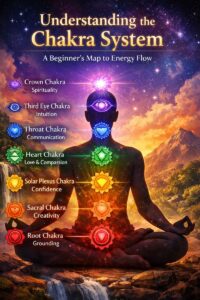 For thousands of years, cultures around the world have explored the idea that the human body is more than just flesh and bone. In many spiritual traditions, particularly those rooted in India, it is believed that a subtle energy flows through us, influencing our physical health, emotions, and spiritual awareness. At the heart of this belief is the chakra system.
If you’re new to chakras, this guide will walk you through the basics in a grounded, easy-to-understand way, no prior spiritual experience required.
What Are Chakras?
The word chakra comes from Sanskrit and means “wheel” or “disk.” Chakras are often described as spinning energy centres within the body that regulate the flow of life force energy (sometimes called prana or chi).
While chakras aren’t physical organs you can see or touch, they are believed to correspond with major nerve centres, glands, and emotional patterns. When energy flows freely through the chakras, a person may feel balanced, energised, and emotionally clear. When that flow is blocked or imbalanced, it can show up as physical discomfort, emotional struggles, or mental fatigue.
Most modern teachings focus on seven main chakras, aligned along the spine from the base of the body to the crown of the head.
The Seven Main Chakras Explained
-
-
-
Root Chakra (Muladhara)
-
-
-
-
-
- Location: Base of the spine
- Associated with: Safety, survival, stability
- Colour: Red
-
-
The root chakra forms your foundation. It relates to your basic needs, food, shelter, security, and a sense of belonging. When balanced, you may feel grounded and safe in the world. When out of balance, fear, anxiety, or financial stress can dominate.
Simple grounding practices like walking barefoot on grass, gardening, or focusing on steady breathing can help support this chakra.
-
-
-
Sacral Chakra (Svadhisthana)
-
-
-
-
-
- Location: Lower abdomen, below the navel
- Associated with: Creativity, pleasure, emotions
- Colour: Orange
-
-
The sacral chakra governs how you experience joy, creativity, and emotional expression. It’s also linked to intimacy and relationships. Balance here allows for healthy emotional flow and creative energy, while imbalance can show up as emotional numbness or over-attachment.
Movement, dance, creative hobbies, and time near water are often associated with sacral chakra balance.
-
-
-
Solar Plexus Chakra (Manipura)
-
-
-
-
-
- Location: Upper abdomen, stomach area
- Associated with: Confidence, personal power, self-esteem
- Colour: Yellow
-
-
This chakra is your inner fire. It influences how you see yourself and how confidently you move through the world. A balanced solar plexus supports motivation and healthy boundaries. An imbalance may lead to low self-esteem, control issues, or chronic self-doubt.
Practices that encourage self-trust, such as setting small goals and celebrating achievements, can strengthen this energy centre.
-
-
-
Heart Chakra (Anahata)
-
-
-
-
-
- Location: Centre of the chest
- Associated with: Love, compassion, connection
- Colour: Green (sometimes pink)
-
-
The heart chakra bridges the lower, more physical chakras with the upper, more spiritual ones. It governs love for yourself and others, empathy, forgiveness, and emotional openness.
When balanced, you may feel connected and compassionate without losing healthy boundaries. When blocked, you might struggle with grief, resentment, or emotional withdrawal.
Acts of kindness, gratitude practices, and deep breathing exercises can gently open the heart chakra.
-
-
-
Throat Chakra (Vishuddha)
-
-
-
-
-
- Location: Throat
- Associated with: Communication, truth, self-expression
- Colour: Blue
-
-
The throat chakra is all about expression, speaking your truth and listening with clarity. A balanced throat chakra supports honest communication and creative expression. When imbalanced, you might feel unheard, shy, or prone to over-talking.
Journalling, singing, or simply practising clear, respectful communication can help restore balance here.
-
-
-
Third Eye Chakra (Ajna)
-
-
-
-
- Location: Between the eyebrows
- Associated with: Intuition, insight, awareness
- Colour: Indigo
-
Often linked to inner wisdom, the third eye chakra relates to perception beyond logic. It governs intuition, imagination, and mental clarity. When balanced, you may trust your inner guidance more easily. When blocked, confusion or overthinking may arise.
Meditation, quiet reflection, and limiting mental overload (like excessive screen time) can support this chakra.
-
-
-
Crown Chakra (Sahasrara)
-
-
-
-
-
- Location: Top of the head
- Associated with: Spiritual connection, higher consciousness
- Colour: Violet or white
-
-
The crown chakra represents your connection to something greater than yourself, whether that’s spirituality, universal consciousness, or a sense of purpose. Balance here can bring feelings of peace and meaning, while imbalance may feel like disconnection or lack of direction.
Silence, meditation, and contemplation are often associated with nurturing the crown chakra.
How Energy Flows Through the Chakra System
Energy is believed to flow upward and downward through the chakras, creating a dynamic system rather than isolated parts. Lower chakras focus on physical survival and emotion, while upper chakras relate to communication, insight, and spiritual awareness.
For beginners, it’s helpful to remember that balance matters more than “opening” chakras. A strong spiritual focus without grounding can feel just as uncomfortable as being overly grounded without emotional expression.
Simple Ways Beginners Can Work with Chakras
You don’t need crystals, incense, or complex rituals to begin working with chakras. Simple practices include:
- Mindful awareness: Notice where tension or emotion sits in your body
- Meditation: Visualise each chakra as a softly glowing light
- Breathing: Slow, steady breathing supports overall energy flow
- Lifestyle balance: Rest, movement, creativity, and connection all play a role
The chakra system is best approached as a map, not a rulebook, something to explore with curiosity rather than pressure.
Final Thoughts
Understanding the chakra system offers a gentle framework for self-reflection, emotional awareness, and personal growth. Whether you view chakras as spiritual energy centres or symbolic guides to mind-body balance, they provide a useful language for tuning in to yourself.
As a beginner, start small. Observe, reflect, and explore what resonates with you. The journey through the chakras isn’t about perfection; it’s about awareness, balance, and connection.